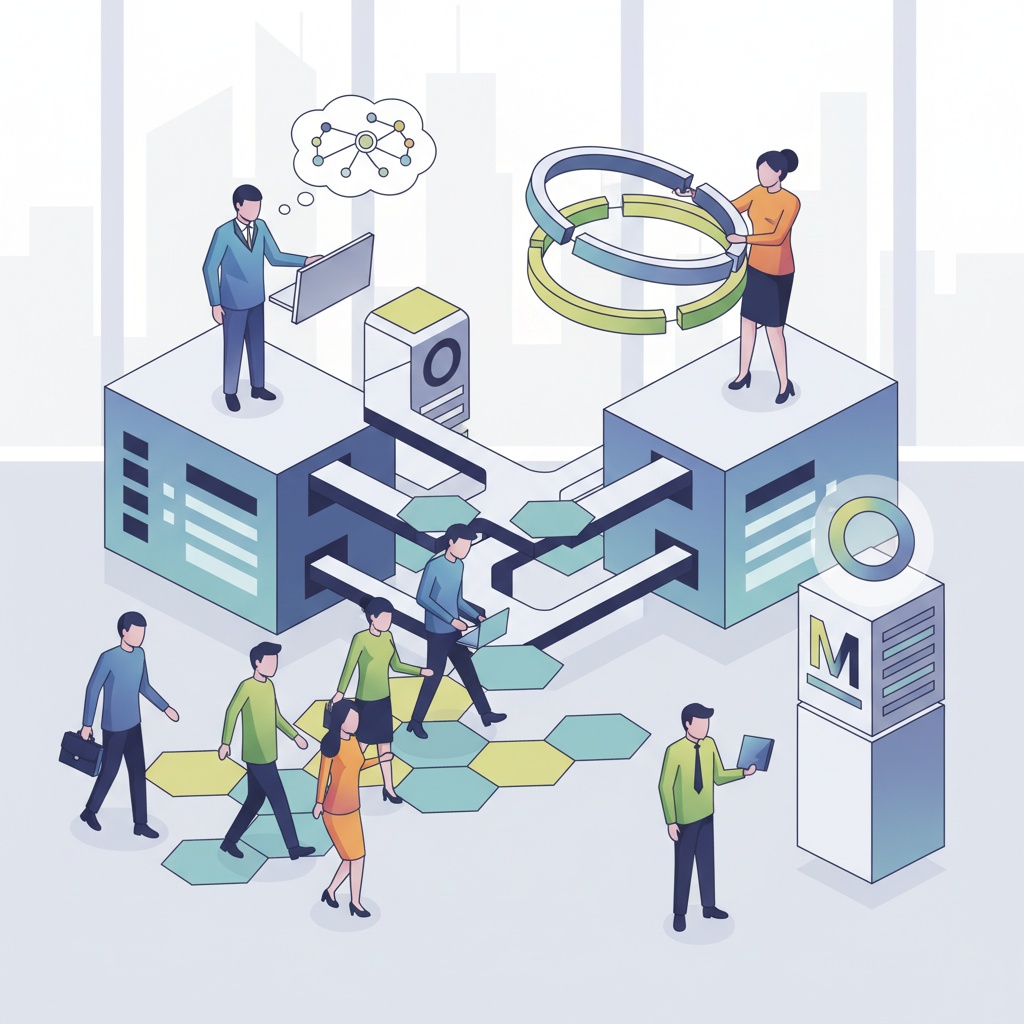
Edge computing infrastructure for hybrid configurations
Edge Computing Infrastructure for Hybrid Configurations: Building Tomorrow’s Distributed Networks
Reading time: 12 minutes
Ever wondered why your streaming service buffers at crucial moments, or why industrial IoT devices sometimes lag when making split-second decisions? The answer often lies in where data processing actually happens. Edge computing infrastructure is revolutionizing how we think about data processing, bringing computation closer to where data originates—and hybrid configurations are emerging as the sweet spot between pure cloud and pure edge strategies.
Let’s cut through the hype and explore what really matters when designing edge computing infrastructure for hybrid environments.
Table of Contents
- Understanding Edge Computing in Hybrid Contexts
- Architecture Patterns That Actually Work
- Critical Infrastructure Components
- Deployment Strategies and Best Practices
- Overcoming Common Implementation Challenges
- Performance Metrics and Optimization
- Your Implementation Roadmap
- Frequently Asked Questions
Understanding Edge Computing in Hybrid Contexts
Well, here’s the straight talk: Edge computing isn’t about replacing your cloud infrastructure—it’s about strategically distributing workloads where they make the most sense. A hybrid configuration gives you the flexibility to process time-sensitive data at the edge while leveraging cloud resources for heavy computation, long-term storage, and centralized analytics.
The Business Case for Hybrid Edge Infrastructure
Consider this real-world scenario: A manufacturing company in Germany implemented a hybrid edge-cloud system across 15 production facilities. By processing quality control image analysis at the edge, they reduced latency from 200ms to 8ms—fast enough to catch defects in real-time on high-speed production lines. Meanwhile, their cloud infrastructure aggregated data from all facilities for predictive maintenance models. The result? A 34% reduction in defective products and $2.3 million in annual savings.
Key advantages of hybrid configurations:
- Latency optimization: Process critical workloads locally (sub-10ms response times)
- Bandwidth efficiency: Reduce cloud data transfer costs by 60-80%
- Resilience: Continue operations during network disruptions
- Regulatory compliance: Keep sensitive data on-premises when required
- Scalability: Leverage cloud resources for burst capacity
When Does Hybrid Edge Make Sense?
Not every organization needs edge computing. According to Gartner’s 2023 research, approximately 75% of enterprise-generated data will be processed outside traditional centralized data centers by 2025. But that doesn’t mean it’s right for everyone.
Prime candidates for hybrid edge infrastructure:
- Autonomous vehicles and robotics requiring <20ms decision-making
- Retail operations with real-time inventory and customer analytics
- Healthcare facilities processing patient data with privacy constraints
- Industrial IoT deployments with thousands of sensors
- Content delivery networks serving geographically dispersed users
Architecture Patterns That Actually Work
Let’s dive into proven architectural approaches that balance complexity with maintainability.
The Three-Tier Hybrid Model
The most successful hybrid edge deployments follow a three-tier architecture:
Tier 1: Device Edge — Lightweight processing on IoT devices, sensors, and smart equipment. Think microcontrollers running inference models or basic data filtering.
Tier 2: Infrastructure Edge — Regional edge servers or micro data centers located near device clusters. This is where the heavy lifting happens: complex analytics, data aggregation, local storage, and orchestration.
Tier 3: Cloud Core — Centralized cloud resources handling model training, long-term data warehousing, cross-site analytics, and management dashboards.
Pro Tip: Start with a two-tier approach (infrastructure edge + cloud) before adding device edge capabilities. This reduces complexity during initial deployment and lets you prove value faster.
Data Flow Patterns
Understanding how data should flow through your hybrid infrastructure is crucial. Here’s a comparison of common patterns:
| Pattern | Use Case | Latency | Bandwidth Impact | Complexity |
|---|---|---|---|---|
| Process-at-Edge | Real-time decisions, autonomous systems | 5-20ms | Very Low | Medium |
| Hybrid Processing | Video analytics, IoT aggregation | 50-200ms | Low | High |
| Filter-and-Forward | Sensor networks, log aggregation | 100-500ms | Medium | Low |
| Batch-and-Sync | Historical analytics, ML training | Minutes-Hours | High | Low |
| Bidirectional Sync | Model updates, configuration management | Variable | Medium | High |
Critical Infrastructure Components
Ready to build your hybrid edge infrastructure? Let’s examine the components that separate successful deployments from problematic ones.
Edge Computing Hardware
The hardware selection mistake I see most often: Organizations over-provision edge hardware, treating edge locations like mini data centers. This drives costs through the roof and creates maintenance nightmares.
Instead, match hardware to workload requirements:
- Micro edge servers: Intel NUC, NVIDIA Jetson for lightweight inference and data aggregation (5-50W power consumption)
- Ruggedized edge appliances: HPE Edgeline, Dell EMC VxRail for industrial environments with extreme temperatures
- GPU-accelerated edge: NVIDIA EGX, AMD Radeon Instinct for AI/ML workloads requiring parallel processing
- Network equipment: 5G gateways, SD-WAN appliances, local switches with traffic prioritization
Software Stack Essentials
The software layer makes or breaks hybrid edge deployments. A retail chain I worked with learned this the hard way—they deployed custom-built edge applications that became impossible to update across 200+ store locations. After six months of pain, they migrated to containerized workloads managed through Kubernetes.
Core software components:
- Container orchestration: K3s (lightweight Kubernetes) or AWS IoT Greengrass for edge workload management
- Edge runtime: Azure IoT Edge, Google Anthos for hybrid cloud integration
- Data processing frameworks: Apache Kafka (edge), Apache NiFi for data pipeline management
- Monitoring and observability: Prometheus + Grafana, Datadog for edge-specific metrics
- Security layer: Zero-trust network access, certificate management, encrypted communication
Edge Infrastructure Capability Comparison
Deployment Strategies and Best Practices
The Phased Rollout Approach
Quick scenario: You’re tasked with deploying edge infrastructure across 50 regional offices. Do you flip the switch everywhere simultaneously? Absolutely not. Here’s the strategic approach that minimizes risk:
Phase 1: Pilot Deployment (Weeks 1-4)
- Select 2-3 representative locations with varied conditions
- Deploy minimal viable infrastructure
- Collect performance baseline metrics
- Identify integration challenges early
Phase 2: Regional Expansion (Weeks 5-12)
- Roll out to 20% of locations
- Implement automated provisioning workflows
- Establish remote management procedures
- Train on-site personnel
Phase 3: Full Production (Weeks 13-20)
- Complete deployment across all locations
- Optimize based on performance data
- Document lessons learned
- Establish continuous improvement processes
Configuration Management at Scale
Managing configurations across distributed edge infrastructure requires automation. I’ve seen organizations struggle with “configuration drift”—where edge nodes gradually diverge from intended configurations, creating security vulnerabilities and performance issues.
Infrastructure-as-Code (IaC) for edge deployments:
- Use Terraform or Ansible for declarative configuration management
- Store edge configurations in version-controlled repositories (Git)
- Implement GitOps workflows for automated deployments
- Schedule regular configuration audits and compliance checks
Overcoming Common Implementation Challenges
Challenge 1: Network Connectivity Reliability
Edge locations often have unpredictable network connectivity—intermittent outages, variable bandwidth, and high latency to cloud resources. A logistics company faced this exact issue with their warehouse edge deployments, where forklift-mounted scanners would lose connectivity during WiFi handoffs.
Solution framework:
- Implement store-and-forward capabilities for resilience
- Use local data caching with eventual consistency models
- Deploy redundant connectivity options (cellular backup, satellite)
- Design applications to gracefully degrade during outages
- Prioritize critical traffic using QoS policies
Challenge 2: Security in Distributed Environments
Edge locations are inherently less secure than centralized data centers—physical access is harder to control, and attack surfaces multiply with each node. According to a 2023 Cybersecurity & Infrastructure Security Agency report, edge devices experienced 42% more security incidents than cloud workloads.
Multi-layered security approach:
- Zero-trust architecture: Authenticate and authorize every request, regardless of origin
- Hardware security modules (HSM): Protect cryptographic keys at the edge
- Encrypted communication: TLS 1.3 for all data in transit
- Automated patching: Regular security updates without manual intervention
- Network segmentation: Isolate edge workloads from corporate networks
Challenge 3: Operational Visibility and Troubleshooting
When you have hundreds or thousands of edge nodes, traditional troubleshooting approaches break down. You can’t SSH into every edge device when issues arise—you need centralized observability with edge-specific insights.
Practical monitoring strategy:
- Deploy lightweight agents collecting system, application, and network metrics
- Aggregate logs centrally using tools like Fluentd or Elasticsearch
- Implement distributed tracing for request flows spanning edge and cloud
- Create location-aware dashboards showing regional performance patterns
- Set up intelligent alerting that correlates edge events with cloud infrastructure
Performance Metrics and Optimization
Measuring What Matters
I’ve reviewed countless edge computing projects where teams tracked dozens of metrics but struggled to answer the fundamental question: “Is this working better than before?” Here’s what you should actually measure:
Latency metrics:
- P50, P95, P99 response times for critical operations
- Round-trip time between edge and cloud components
- Local processing time versus cloud processing time
Resource utilization:
- CPU and memory consumption patterns across edge fleet
- Storage capacity trends and growth rates
- Network bandwidth utilization and peak patterns
Business impact metrics:
- Cost per transaction (edge vs. cloud)
- User experience improvements (page load time, transaction completion rate)
- Availability during network disruptions
- Data transfer cost reduction
Optimization Strategies
Performance optimization for hybrid edge isn’t a one-time activity—it requires continuous refinement based on real-world usage patterns.
Workload placement optimization: Use machine learning models to predict optimal workload placement. A financial services company implemented dynamic workload routing, moving computationally intensive fraud detection to cloud resources during off-peak hours and processing at edge during transaction peaks. Result: 28% reduction in infrastructure costs.
Data lifecycle management: Implement automated data tiering—hot data stays at edge for immediate access, warm data moves to regional storage, cold data archives to cloud object storage. This approach can reduce edge storage costs by 60-70%.
Model optimization for edge inference: Use model quantization, pruning, and knowledge distillation to reduce AI/ML model sizes by 80-90% without significant accuracy loss. Smaller models mean faster inference and lower hardware requirements at the edge.
Your Implementation Roadmap
The edge computing landscape is evolving rapidly, with hybrid configurations becoming the standard rather than the exception. As 5G networks expand and edge hardware becomes more capable, the gap between cloud and edge computing will continue narrowing—creating unprecedented opportunities for innovative architectures.
Your next steps toward hybrid edge success:
- Audit your current architecture — Identify workloads with high latency sensitivity, significant bandwidth costs, or regulatory constraints. These are your prime candidates for edge migration.
- Start with a focused pilot — Choose one high-impact use case and deploy edge infrastructure at 2-3 locations. Prove value before scaling. Document learnings meticulously—they’ll inform your broader rollout strategy.
- Build automation from day one — Manual configuration works for 5 edge nodes; it becomes impossible at 50. Invest in infrastructure-as-code, automated deployment pipelines, and centralized management tools early.
- Establish clear governance — Define who owns edge infrastructure, how decisions get made about workload placement, and what security standards apply. Without governance, your hybrid environment will become a management nightmare.
- Plan for continuous optimization — Set up quarterly reviews of edge performance metrics, workload placement decisions, and cost efficiency. Technology evolves; your architecture should too.
Looking ahead: Edge computing infrastructure isn’t just about technology—it’s about rethinking how distributed systems should work in a world where data generation outpaces our ability to centrally process it. Organizations that master hybrid configurations now will have significant competitive advantages as data volumes continue growing exponentially.
What’s the one workload in your environment that would benefit most from edge processing? Start there. Don’t try to transform everything at once—successful hybrid edge implementations happen incrementally, learning from each deployment and building momentum through demonstrated value.
Frequently Asked Questions
What’s the typical ROI timeline for hybrid edge infrastructure?
ROI varies significantly based on use case, but most organizations see measurable returns within 6-18 months. The fastest payback comes from bandwidth cost reduction and latency improvements that directly impact user experience. For example, edge-based video analytics can reduce cloud data transfer costs by 70-80%, delivering ROI in under 12 months. More complex deployments involving custom application development may take 18-24 months to reach positive ROI. Start with workloads offering clear, quantifiable benefits—bandwidth reduction, latency improvement, or regulatory compliance—to build business case momentum.
How do I choose between public cloud edge services and self-managed edge infrastructure?
This decision hinges on three factors: scale, expertise, and control requirements. Public cloud edge services (AWS Outposts, Azure Stack Edge, Google Distributed Cloud) work well for organizations with 10-100 edge locations, limited infrastructure expertise, and standard workload requirements. They offer managed services, automated updates, and integrated tooling. Self-managed infrastructure makes sense when you need custom hardware configurations, have strict data sovereignty requirements, operate at massive scale (1000+ locations), or already have strong DevOps capabilities. Many organizations start with cloud edge services for quick deployment, then gradually transition to hybrid models mixing managed and self-managed components as they mature.
What skills does my team need to manage hybrid edge infrastructure effectively?
Hybrid edge requires a blend of traditional IT operations and cloud-native skills. Essential competencies include: containerization and orchestration (Docker, Kubernetes), infrastructure-as-code (Terraform, Ansible), distributed systems architecture, network engineering (SD-WAN, routing, QoS), security operations (zero-trust, certificate management), and observability tools (Prometheus, Grafana). Most importantly, your team needs troubleshooting skills for distributed environments—debugging issues across edge nodes, network connections, and cloud components requires systematic approaches and strong fundamentals. Consider starting with training for 2-3 team members who can become internal experts, then gradually expanding knowledge across the broader team through shadowing and documentation.